As hiring environments become more complex and fast-moving, organizations are expected to secure qualified talent without compromising accuracy, control, or confidence in the selection process. At the same time, the rise of digital applications, remote recruitment, and increasingly polished candidate documentation has made it more difficult to identify inconsistencies at an early stage. Depending only on CVs, submitted certificates, or candidate claims is no longer enough for institutions that want to make sound hiring decisions and protect operational quality from the risks of misrepresented credentials.
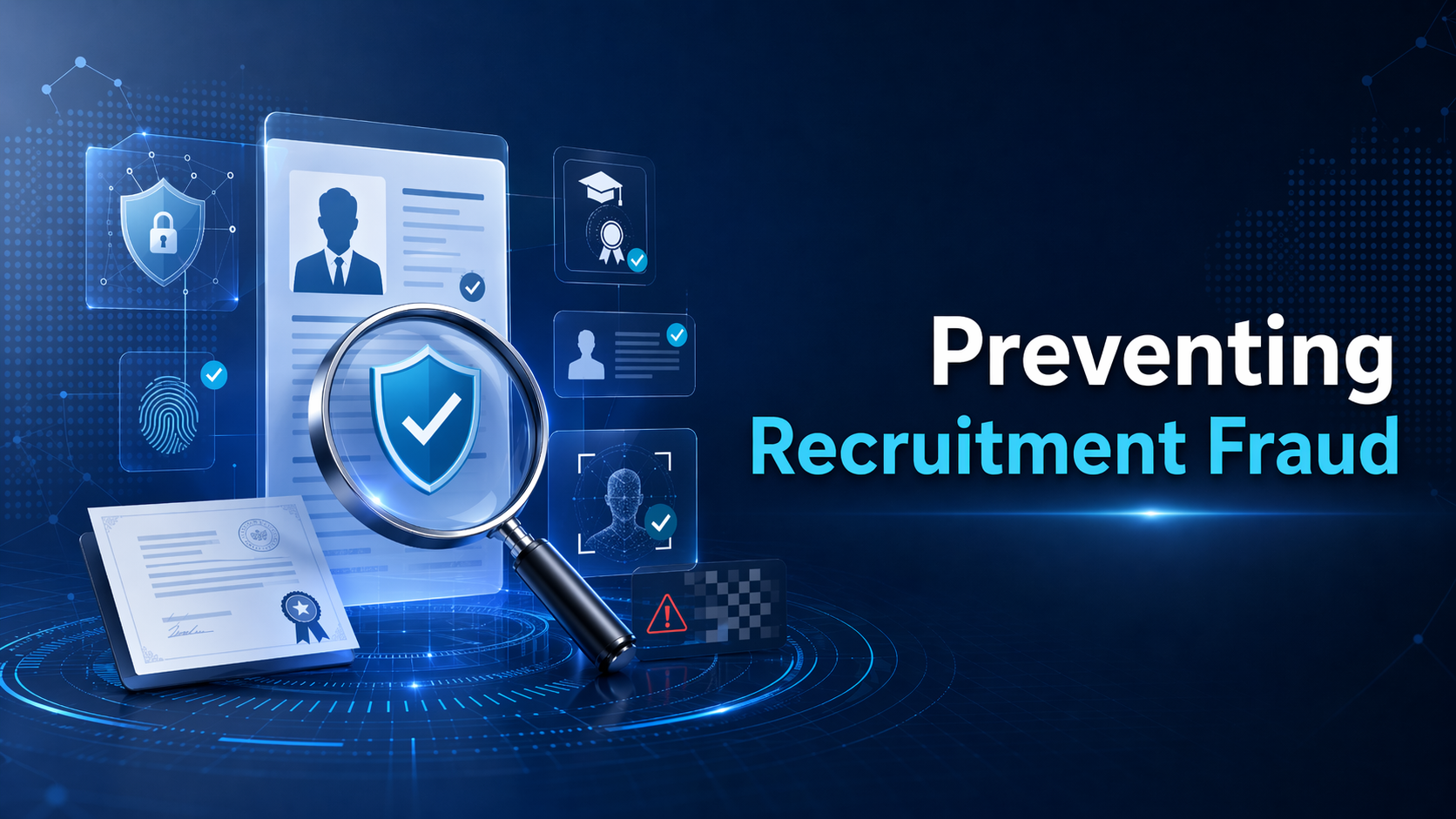
This is why Preventing Recruitment Fraud has become a vital priority for organizations seeking stronger governance, better compliance, and more reliable workforce planning. Credential verification is no longer a routine administrative checkpoint added at the end of recruitment. It now plays a central role in protecting institutions from weak hiring outcomes, improving the credibility of candidate data, strengthening internal controls, and ensuring that recruitment decisions are built on verified information from the start of the hiring journey.
For Techtic, a company specialized in digital solutions and trusted outsourcing services for businesses and government entities, this focus aligns directly with its commitment to helping clients build more dependable and efficient operational frameworks. The challenge today goes far beyond checking certificates or validating employment history in isolation. Organizations increasingly need scalable, well-structured solutions that can identify irregularities early, reduce recruitment risk, support HR and compliance teams, and create a more secure and trustworthy hiring process overall.
What Is Credential Fraud and Why Does It Matter?
Credential fraud refers to the submission of false, altered, misleading, or incomplete information by a job applicant for the purpose of gaining employment or achieving an unfair professional advantage. This can take many forms, including falsified academic degrees, manipulated certificates, inflated job titles, exaggerated years of experience, fabricated professional licenses, misrepresented responsibilities, or incomplete disclosure of important employment history.
The danger of credential fraud does not lie only in inaccurate documentation. Its true risk lies in the organizational consequences of appointing someone who is not genuinely qualified for the role they are entering. When institutions hire candidates based on false information, they expose themselves to weak performance, operational disruption, compliance failures, reputational damage, and increased management burden. In some sectors, particularly those involving regulated roles, public services, confidential data, or critical decision-making, the consequences can be even more severe.
In many cases, the issue becomes visible only after the employee has already been hired and integrated into the organization. By then, the institution may have already invested considerable time and resources in recruitment, onboarding, training, and internal coordination, only to discover a gap between the candidate’s stated profile and their actual capabilities. At that stage, correcting the issue is far more expensive than preventing it from the start. This is why institutions must treat hiring fraud prevention as a proactive priority rather than a reactive correction mechanism.
Why Credential Verification Has Become a Business Necessity
Modern organizations are expected to hire faster while maintaining quality, consistency, and accountability. At the same time, they are dealing with growing applicant pools, multiple recruitment platforms, tighter timelines, and higher demands for specialized talent. In this environment, the risk of manipulated information slipping through becomes significantly higher if verification processes are weak, inconsistent, or overly manual.
Credential verification has therefore become essential for several institutional reasons. It helps protect hiring integrity, reduce the risk of poor appointments, strengthen confidence in candidate data, support more reliable workforce planning, improve compliance with internal and regulatory requirements, and protect the organization’s reputation. Most importantly, it helps ensure that the people entering the organization are truly capable of performing the roles for which they are selected.
When verification processes are structured and reliable, organizations do more than catch obvious falsification. They build a culture of fairness, transparency, accountability, and professionalism from the first stages of engagement with potential employees. This has a direct positive effect on trust in HR operations and on the overall quality of the recruitment function.
Common Forms of Recruitment Fraud
Recruitment fraud can appear in obvious forms, but it can also be subtle and difficult to detect without proper processes and tools. Some of the most common forms include:
Falsified Academic Qualifications
This includes submitting fake degrees, altered academic certificates, qualifications issued by unrecognized institutions, or documents containing manipulated dates, majors, grades, or graduation details.
Inflated Work Experience
Some candidates exaggerate their years of service, claim roles they did not hold, or present limited duties as though they were senior strategic responsibilities. This can create a false impression of competence and readiness.
Altered Employment Documents
Candidates may submit non-official employment letters, edited experience certificates, or digitally modified records designed to misrepresent their history or credentials.
Misrepresentation of Professional Status
This includes falsely claiming professional licenses, industry memberships, technical certifications, or formal accreditations that the candidate does not actually hold.
Omission of Material Information
In some cases, fraud is not about what is included, but what is intentionally excluded. This may involve hiding significant employment gaps, omitting relevant disciplinary history, or leaving out information that would affect the hiring decision.
These forms of manipulation affect far more than the application itself. They create a false foundation on which the recruitment decision is made, leading the organization to act on inaccurate assumptions about the candidate’s qualifications, readiness, and suitability.
The Impact of Hiring Fraud on Businesses and Government Entities
When a person is hired based on false or misleading qualifications, the impact can spread across operational, administrative, and strategic levels. The most immediate consequence is a decline in performance quality. An employee who lacks the knowledge, experience, or credentials required for the role may struggle to meet expectations, make repeated mistakes, require excessive supervision, slow down workflows, or weaken team performance.
For businesses, this can lead to project delays, service failures, reduced customer satisfaction, internal inefficiencies, and higher costs linked to error correction, retraining, or replacement hiring. In highly competitive markets, even a single poor hire in a sensitive function can affect revenue, service continuity, and client trust.
For government entities, the stakes are often even higher. Public institutions are expected to deliver services with consistency, fairness, and accountability. Hiring individuals on the basis of false credentials can affect procedural integrity, service reliability, public trust, and institutional credibility. In roles linked to public-facing services, regulatory compliance, or critical administrative functions, the impact of unverified qualifications can extend well beyond internal HR concerns.
In both sectors, hiring fraud also weakens governance. It creates avoidable risk, reduces confidence in recruitment processes, and may expose the institution to legal, audit, or compliance complications, especially when role-specific certifications or formal qualifications are mandatory.
How Credential Manipulation Can Be Detected
Effective verification today goes beyond visually reviewing documents or checking whether files appear complete. Organizations are increasingly moving toward more robust models that combine structured review, digital analysis, source validation, data matching, and process integration.
Source Verification
One of the most reliable methods is verification directly from the issuing body. This includes confirming that a degree, certificate, license, or professional status is authentic and that it matches the applicant’s details as recorded by the authorized institution.
Digital Document Screening
Digital tools can help identify inconsistencies that may not be visible in manual review. These may include irregular formatting, suspicious edits, unusual metadata patterns, inconsistent layouts, repeated design anomalies, or content discrepancies within the same document.
Cross-Checking Information Across Multiple Inputs
By comparing data across the CV, application form, supporting documents, references, and available records, organizations can identify contradictions in dates, roles, academic timelines, credentials, or employment sequences.
Identifying Illogical Patterns
Some forms of fraud only become visible when multiple data points are analyzed together. For example, experience timelines may overlap in unrealistic ways, credentials may not align with the applicant’s stated professional progression, or achievements may appear inconsistent with the seniority or duration of prior roles.
Embedding Verification Within the Hiring Process
The most effective organizations do not treat credential verification as a final-stage task. Instead, they integrate verification into earlier recruitment stages to flag higher-risk cases before time and resources are spent moving them through the process.
Fraud Prevention as a Proactive Operational Model
The traditional approach to recruitment fraud often depends on discovering problems after hiring has taken place. This reactive model is costly, slow, and operationally disruptive. By the time the issue is discovered, the organization may have already made the appointment, committed resources, and exposed itself to avoidable risk.
A more effective approach is proactive prevention. This means building verification into the hiring model itself, so that questionable information is identified before it turns into a finalized employment decision. Proactive fraud prevention helps organizations reduce manual inconsistencies, standardize review criteria, improve decision confidence, and maintain recruitment speed without sacrificing due diligence.
This approach delivers several important advantages. It prevents false claims from progressing too far in the recruitment cycle. It reduces the need for later corrective actions. It helps HR teams operate more confidently and efficiently. It strengthens data quality and improves the integrity of hiring decisions. Most importantly, it transforms verification from a defensive process into a strategic enabler of workforce quality.
The Role of Techtic in Building More Reliable Verification Frameworks
For Techtic, addressing recruitment fraud is not about offering a disconnected technical function. It is about helping organizations build practical, integrated, and scalable operating models that improve decision quality, reduce exposure to hiring risks, and strengthen recruitment integrity across the board.
As a provider of digital solutions and trusted outsourcing services, Techtic is well positioned to support businesses and government institutions in establishing more effective verification practices. This includes designing clear workflows, integrating validation steps into recruitment operations, reducing dependence on fragmented manual checks, and enabling HR, compliance, and operations teams to work within a more structured and measurable framework.
This becomes especially valuable for institutions handling large application volumes, operating in regulated environments, or requiring a high degree of trust, precision, and traceability in their hiring processes. In such contexts, speed alone is not enough. Institutions need hiring workflows that are efficient, reliable, consistent, and aligned with broader governance and service-quality objectives.
Through a practical, operations-focused approach, Techtic can help institutions move toward hiring models where verification is embedded, risk is reduced earlier, and recruitment processes become more dependable and scalable over time.
How Digital Solutions Improve Recruitment Quality
Digital solutions do much more than accelerate individual steps. They help redesign the recruitment process to become more structured, more consistent, and more intelligent. When applied to credential verification, they contribute to multiple areas of improvement.
They support better decision accuracy by reducing reliance on surface-level review and providing more reliable indicators for assessing candidate information. They enable consistent treatment across applications, ensuring that the same controls and standards are applied to all candidates rather than relying on variable individual judgment. They improve speed without compromising quality, allowing institutions to review information more efficiently while maintaining robust verification standards.
They also improve the experience of internal teams by reducing repetitive manual follow-up and enabling HR professionals to focus more on candidate evaluation, role fit, and strategic talent decisions. In addition, digital workflows strengthen governance and auditability by documenting steps, recording outcomes, and making verification actions easier to trace when needed.
Why This Matters for Businesses
Private-sector companies need to hire quickly, but they also need to hire correctly. Delays in filling important roles can affect performance, but hiring the wrong person can create even greater cost and disruption. This is why a strong prevention and verification model helps businesses strike the right balance between speed and accuracy.
This is especially important for organizations operating in functions that require specialized expertise, professional licensing, technical precision, or direct responsibility for client outcomes. In such environments, the cost of hiring based on false claims is not limited to one employee. It can affect teams, service quality, customer relationships, compliance posture, and organizational performance more broadly.
A reliable verification approach helps companies protect growth, strengthen operational quality, and build a workforce that genuinely reflects the standards they expect.
Why It Matters for Government Entities
For government institutions, recruitment integrity is closely linked to public service quality, procedural reliability, and institutional credibility. Hiring processes within the government sector must support fairness, transparency, control, and consistency. This means that qualification verification is not merely an administrative formality. It is part of protecting the public interest and ensuring that roles are filled by individuals who genuinely meet the required standards.
Government entities often deal with large numbers of applicants, significant documentation volumes, and complex administrative procedures. Relying solely on manual review in such contexts can create inconsistency, delay, and risk. This is where digital solutions and trusted outsourcing support can provide real value by enabling verification processes that are more scalable, more standardized, and easier to govern.
For Techtic, supporting the government sector in this area aligns directly with its role as a trusted partner in delivering dependable, digitally enabled operational solutions that improve both efficiency and institutional confidence.
Indicators That Require Additional Verification
Not every inconsistency automatically proves fraud, but there are clear warning signs that justify deeper review. These include unexplained differences in dates, inconsistencies between the CV and official documents, qualifications that do not align with the candidate’s career trajectory, unusually vague experience records, missing formal details in submitted documents, and inflated descriptions of responsibilities or accomplishments.
Large unexplained gaps, overlapping timeframes, non-standard documentation, or credentials presented without sufficient context may also indicate the need for closer examination. These indicators should not be ignored or handled casually, particularly in roles where trust, technical competence, or compliance are essential.
Building a More Trustworthy Hiring Process Starts Early
The most effective fraud prevention outcomes happen when verification is built into the design of the hiring process itself rather than added later as an afterthought. When validation criteria are clearly defined, responsibilities are structured, and supporting tools are in place, organizations are better able to identify risk early and make more confident decisions without slowing recruitment unnecessarily.
This means institutions should treat credential verification as a core element of recruitment quality, not as an isolated control. The more integrated the process is, the more accurate the decisions become, the lower the exposure to risk, and the more efficient internal teams can be.
Conclusion
Preventing recruitment fraud is no longer a limited precautionary measure. It is now a critical component of building a trustworthy work environment, protecting institutions from inaccurate hiring decisions, improving workforce quality, and strengthening the integrity of administrative operations. As hiring environments become more complex and manipulation methods more sophisticated, organizations increasingly need structured, proactive, and digitally enabled approaches to verification.
For Techtic, this creates a strong opportunity to deliver real value through its expertise in digital solutions and trusted outsourcing services for businesses and government entities. By helping organizations establish more reliable verification processes, reduce hiring risk, and improve operational consistency, Techtic supports a hiring model that is more secure, more efficient, and more aligned with long-term institutional performance.
Frequently Asked Questions
Does recruitment fraud only mean fake academic certificates?
No. It also includes exaggerated experience, altered employment documents, false professional claims, and the omission of material information that could affect the hiring decision.
Why is a CV alone not enough?
Because a CV reflects what the candidate declares, but it does not by itself prove that qualifications, experience, licenses, or employment history are accurate unless they are verified.
Can credential verification be integrated into recruitment without slowing it down?
Yes. When designed properly and supported by effective digital workflows, verification can be completed efficiently without disrupting the hiring process.
What is the biggest advantage of proactive fraud prevention?
Its greatest value is stopping the problem before it becomes a poor hiring decision, along with the operational, administrative, reputational, and compliance-related consequences that follow.
Are these solutions suitable for government entities as well as private companies?
Yes. In fact, they are especially important in the government sector because of the high need for procedural accuracy, governance, public trust, and consistent service delivery.