
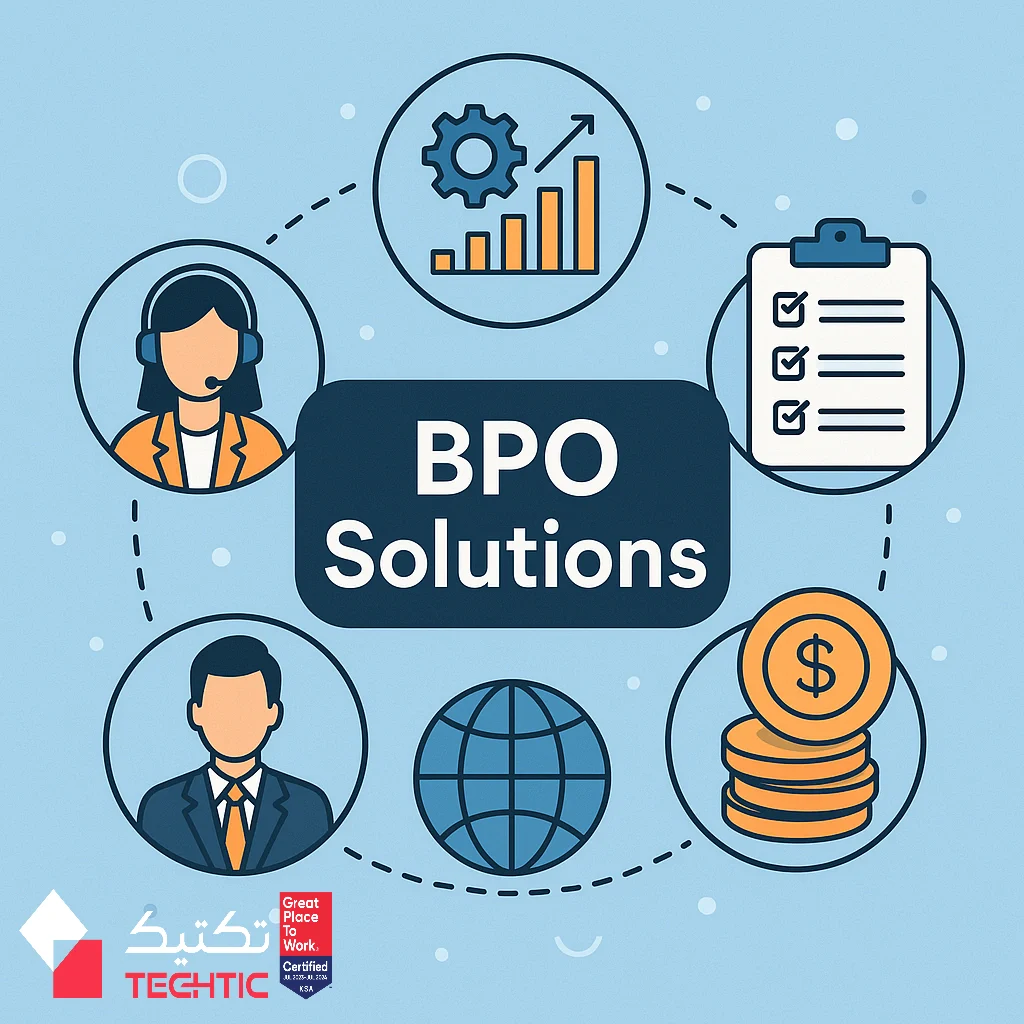
In today’s competitive business environment, companies are constantly looking for ways to streamline operations, reduce costs, and stay focused on their core objectives. One strategy that continues to gain popularity is Business Process Outsourcing, commonly referred to as BPO solutions. These services allow organizations to delegate non-core functions to external experts, improving efficiency and scalability across different industries.
What Are BPO Solutions?
BPO solutions involve outsourcing specific business tasks to a third-party service provider. These tasks can range from customer service, IT support, and data entry to finance and accounting, HR services, and more. By utilizing external resources, companies can focus more on their core competencies while enjoying operational flexibility and cost savings.
Key Benefits of BPO Solutions
Cost Efficiency
BPO solutions reduce overhead costs associated with hiring, training, and maintaining in-house staff. With lower labor costs in offshore and nearshore markets, companies can access the same level of expertise at a fraction of the cost.
Access to Expertise
Businesses gain access to skilled professionals who specialize in specific domains. These experts often bring years of experience, modern tools, and industry best practices to deliver high-quality outcomes.
Scalability
BPO solutions offer flexibility to scale operations up or down based on business needs. Whether a company is growing rapidly or navigating seasonal fluctuations, outsourcing can help adapt without disruptions.
Improved Focus on Core Activities
Delegating administrative or repetitive tasks enables internal teams to concentrate on strategic goals such as innovation, customer engagement, and market expansion.
Enhanced Technology Integration
Leading BPO providers use advanced technologies such as automation, analytics, and AI to improve process accuracy and speed, delivering long-term value to their clients.
Popular Industries That Use BPO Solutions
Healthcare
Finance and Banking
Retail and E-commerce
Telecommunications
Logistics and Supply Chain
Regardless of industry, BPO solutions are tailored to support operational excellence and help organizations maintain a competitive edge.
Future Trends in BPO
As digital transformation continues to reshape the business landscape, BPO solutions are evolving beyond traditional services. Companies are increasingly seeking partners who can provide value-added services such as data analysis, customer journey mapping, and integrated digital support.
The Impact of Business Process Outsourcing (BPO) on Operational Efficiency and Cost Reduction
Business Process Outsourcing (BPO) has evolved into a powerful strategic tool that enables companies to enhance their operational efficiency while significantly reducing costs. In an era where competitiveness is defined by agility, specialization, and scalability, BPO offers a sustainable framework for businesses to achieve higher productivity with optimal resource utilization. By outsourcing non-core processes—such as customer support, data entry, accounting, or IT services—to specialized providers, organizations can focus on innovation, product development, and core business functions that drive long-term growth.
From an operational standpoint, BPO enhances efficiency by introducing standardized workflows, access to global talent pools, and the adoption of cutting-edge technologies that might otherwise require substantial investment. Service providers often employ automation tools, artificial intelligence, and data analytics to streamline processes, minimize manual errors, and ensure consistency across operations. This operational discipline translates into faster turnaround times, improved accuracy, and a higher degree of process visibility, allowing businesses to make informed decisions backed by real-time insights.
One of the most tangible benefits of outsourcing lies in its impact on cost structure. Traditional in-house operations often involve high fixed costs—such as salaries, infrastructure, software licenses, and administrative overheads. Through outsourcing, these fixed costs are converted into variable expenses, enabling companies to pay only for the services they use. This financial flexibility is particularly valuable for startups and mid-sized enterprises seeking to optimize cash flow and allocate resources more strategically. In addition, outsourcing partners located in regions with lower labor costs can deliver the same level of expertise at a fraction of the expense, providing direct financial savings without compromising quality.
Furthermore, BPO providers bring with them economies of scale and accumulated experience across multiple industries. Because they serve various clients simultaneously, they continuously refine their processes, update compliance standards, and adopt new technologies faster than individual firms could. This constant evolution ensures that the client benefits not only from cost savings but also from operational excellence that reflects best practices on a global scale. The result is a more streamlined workflow, fewer redundancies, and a more resilient operational model that can adapt to market volatility and technological shifts.
For example, organizations that outsource their customer service departments often report measurable improvements in customer satisfaction and retention rates. Dedicated BPO teams utilize advanced CRM platforms, automated ticketing systems, and multi-channel communication strategies to handle large volumes of inquiries efficiently and maintain consistent service quality. Similarly, companies that delegate data management or finance processes to specialized partners can benefit from enhanced data accuracy, reduced compliance risks, and faster reporting cycles—factors that directly influence decision-making and profitability.
Beyond financial efficiency, BPO also contributes to operational resilience and scalability. Outsourcing allows companies to quickly adjust capacity in response to demand fluctuations, seasonal peaks, or expansion into new markets without incurring significant recruitment or infrastructure costs. This agility not only prevents operational bottlenecks but also supports global growth strategies by providing 24/7 service coverage through distributed teams across different time zones. As a result, businesses can maintain continuous operations and respond promptly to customer needs in any market.
Moreover, BPO partnerships often lead to cultural and technological transformation within organizations. Collaborating with external experts exposes internal teams to new methodologies, performance metrics, and innovation-driven mindsets. Over time, this knowledge exchange fosters a more dynamic corporate culture and encourages continuous improvement across all departments. In many cases, businesses that integrate outsourcing into their long-term strategy discover new opportunities for process automation, digital transformation, and customer experience enhancement.
Ultimately, the impact of BPO extends far beyond short-term cost reduction. It enables companies to build leaner, smarter, and more adaptable operational ecosystems that are aligned with the realities of a globalized economy. By partnering with reliable service providers, organizations can transform outsourcing from a transactional cost-saving measure into a strategic driver of value creation and sustained growth. When executed effectively—with transparency, accountability, and mutual trust—BPO becomes not just a support mechanism but a catalyst for innovation, competitiveness, and long-term business resilience.
Conclusion
BPO solutions offer more than just cost-saving opportunities. They represent a strategic move towards agility, innovation, and long-term growth. Whether you’re a startup looking to scale or an established business aiming to optimize, outsourcing the right processes can be the key to unlocking your organization’s full potential.